
Let’s talk carbs!
Carbohydrates. An essential macronutrient, and energy-giving…… so why so often villainised? Let’s dive into it!
What are carbs?
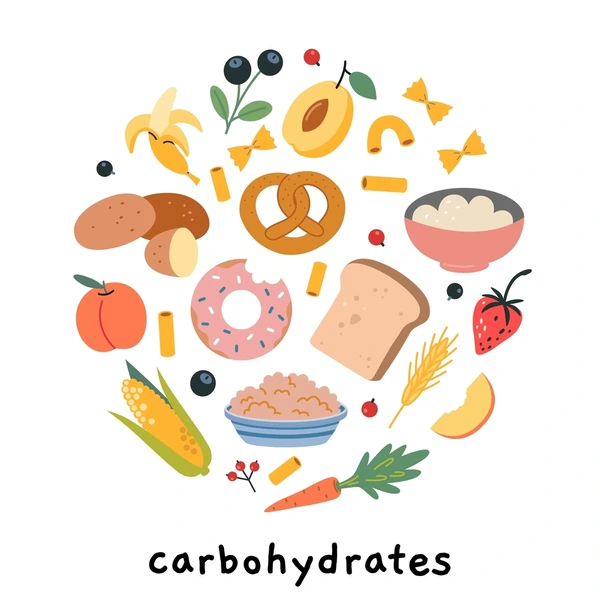
Carbs are, in essence, sugar molecules. They can be found in the form of fibre, starches, or plain old sugar. Your body breaks down the carbohydrates found in different foods into glucose molecules, which are essential for fuelling your body and giving it the energy it needs.
There are multiple different types of these energy-providing molecules that can be broken down into complex and simple carb groups. Complex carbohydrates contain fibre and starches, and have a more complicated structure that takes longer for the body to disassemble and break down into usable components. As a result, they allow for gradual release of glucose into the bloodstream.
Simple carbohydrates include refined breads, cereals, sugars etc. that contain less fibre and are quickly broken down into glucose by the body. This results in energy that can be quickly utilised by the body, but also in a greater spike in blood sugar.
How are they broken down? (insulin and glucagon explained)
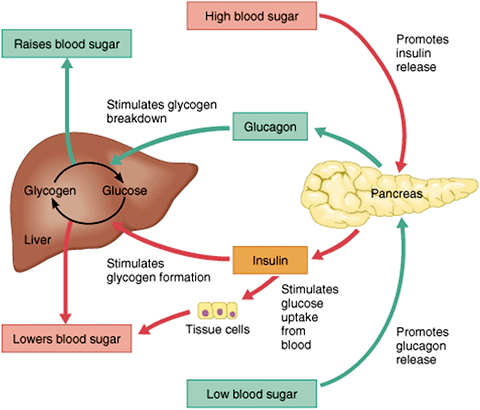
The breakdown of carbs begins when they enter your mouth, as an enzyme called salivary amylase starts breaking them down. As they continue along the digestive tract, they are further broken down into glucose. This influx causes the pancreas to secrete insulin, a hormone which sends signals to body cells to store glucose for later energy use. Its stored form is called glycogen and is usually held in the liver and skeletal muscles.
If you have not eaten for a while and blood sugar falls, the pancreas secretes a hormone called glucagon, which signals to your cells to convert glycogen back into glucose and allow it to enter your bloodstream. It is in this way that your body is able to keep your blood sugar levels balanced throughout the day.
Why are they important?
The recommended daily allowance for carbs is that it should be between 45-65% of your daily calories. That’s almost half! And for good reason.
As mentioned before, carbs are the main source of energy for a variety of bodily processes. They provide fuel for everyday activities, allow for better athletic performance, and prevent fatigue and exhaustion. One of the most crucial organs they supply energy to is the brain.
The brain relies heavily on glucose, and therefore carbs, to be able to function. Without sufficient carbs, your brain will not have the capacity to learn, think, hold memories and perform to the best extent that it can.
In a sport sense, carbs provide the energy you need to get the most out of your activities. When you exercise, especially for extended periods, you burn a lot of calories (energy). This means that you will get tired unless you replenish in the right amounts- often before, during and after. Carbs can aid in your recovery as they replenish your cells’ glycogen stores so that your body doesn’t try and harbour energy from your stored protein, but instead keeps the focus on using this for muscle-building.
Fibre from vegetables, seeds, fruits, oats and other sources is not digested by the body. Instead it ferments in the colon and allows for healthy bacterial growth resulting in a well-balanced gut microbiota. It also adds bulk to stool which allows for more comfortable bowel movements.
So, why the taboo?
Over the years, carbs have gotten a bad rep due to the rise in prevalence of health issues such as weight-gain and diabetes. Because diabetes is a condition where blood sugar is dysregulated, excessive carbohydrate intake is often seen as a big contributing factor. While this can indeed be a factor, other factors such as physical activity level, genetics, and age also play a role.
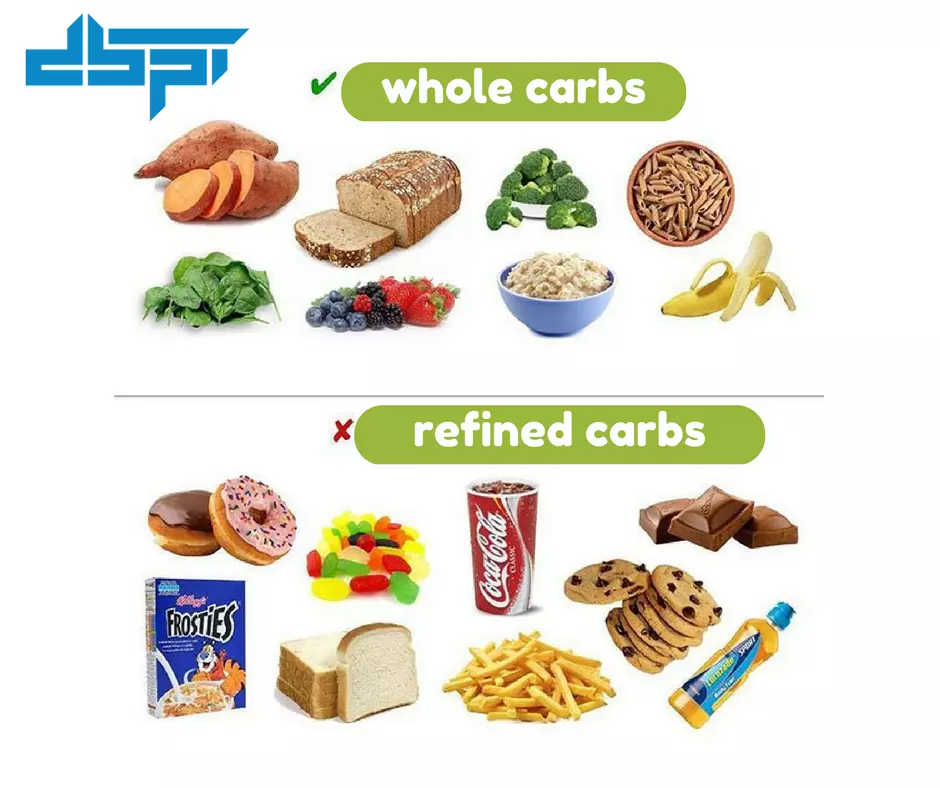
The risk lies in too many ultra-processed, super refined carbs, as these can lead to insulin insensitivity if your blood sugar levels are spiked time and time again. Too much refined sugar can also lead to weight-gain as well as dental problems.
Despite this, carbohydrates as a whole are not the problem. Statements such as “I’m watching my carbs” and “carbs are bad for you” are extremely harmful and can lead to misconceptions and fad diets that prevent people from fuelling their bodies as they need to be fuelled.
Like anything in life, there is a balance. The focus should be on what kind of carbs you are eating, and as with any macronutrient (we’ll take a look at this again when we discuss fats), not eliminating it entirely.
Eating mostly complex carbs and whole foods (fruits, vegetables, whole-grains, legumes, natural starches such as potatoes etc.) will allow your body to keep it’s glucose levels where they need to be- not to mention providing all sorts of extra vitamins, minerals and fibre that is not usually present in refined carbs. This is especially important for those with diabetes or other health conditions that can be managed with diet.
Endurance athletes?
There are even circumstances where refined carbs are not only good, but one hundred percent necessary. This is the case in endurance sports which focus on cardio activity. While your body is working (running, cycling, swimming etc.) it focuses on providing energy to your muscles and ridding itself of excess carbon dioxide. As such, it cannot also fully focus on digesting food properly. This is why before and during long marathons or other kinds of races, athletes are encouraged to consume simple carbs that will give them usable energy quickly while not adding extra stress to their body to digest complex structures while exercising. Energy in, then energy out. As simple as that.
In conclusion….
Awareness is key! What you put into your body is part of taking care of it. Give it the energy it needs, but focus on providing it with foods that are whole, natural, and well-rounded. Don’t see carbs as your enemy, or even food for that matter. A balanced diet including complex carbs combined with daily movement and good lifestyle choices can do wonders for your health- physically, emotionally and mentally. And…. says the sweet-tooth dietetics student… Go have that sweet treat!

References: https://www.ncbi.nlm.nih.gov/books/NBK459280/, https://my.clevelandclinic.org/health/articles/15416-carbohydrates, https://pubmed.ncbi.nlm.nih.gov/33973552/, Sports Nutrition Notes- R. Visagie.