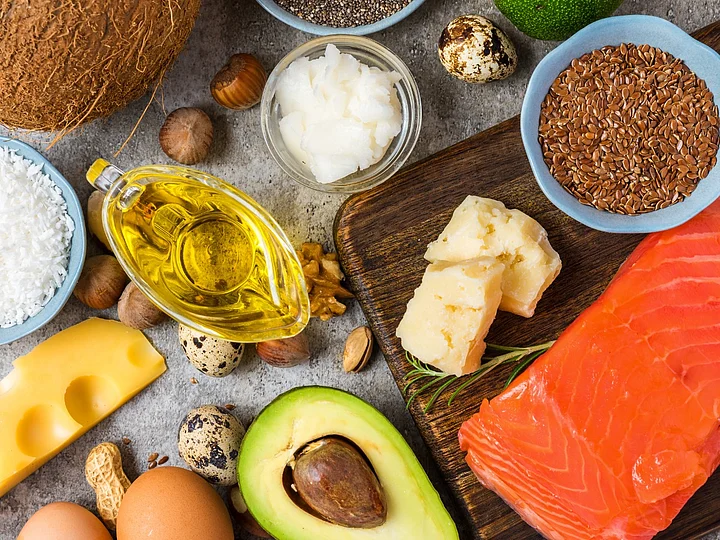
Let’s talk fats!
So, we’ve covered carbs and protein… now let’s talk about the most controversial macronutrient of all. Fats!
What are fats?
Fats, also called lipids, are an essential nutrient that forms part of every person’s daily diet. They are the highest in calorie density of all macronutrients, and are mostly found in the form of triglycerides.
Fats provide the building blocks for many cell membranes. They also have a protective effect on your organs, while allowing fat soluble vitamins such as A, D, E and K to be effectively absorbed within your body. They are also crucial in hormones and signalling in the body, which we’ll dive into more a bit later.
Let’s have a look at the different types…
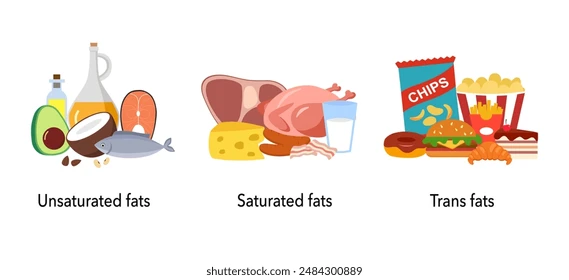
Fats can be broken down into unsaturated, saturated, and trans fats. While some can have more drastic effects on your body when consumed in excess, fats should not be labelled “bad” as a whole.
Unsaturated fats, which are liquid at room temperature, have two groups, namely monounsaturated and polyunsaturated. These are sometimes shortened to “MUFAs” and “PUFAs”. At a molecular level, these fats contain one or more double carbon to carbon bond in their chemical structure. Monounsaturated fats are found mostly in plant sources such as seed oils (olive, canola, peanut, safflower etc.), nuts, seeds themselves and avocados.
Polyunsaturated fats are the omega-3’s and omega-6’s we so often talk about. Sources of omega-3’s include fatty fish such as sardines and salmon, flaxseeds, and leafy greens. You can find omega-6’s in other edible seeds and nuts such as almonds, pine nuts, sunflower seeds and some legumes.
Saturated fats are solid at room temperature and come from animal sources such as red meats and dairy. They can also be found in plant sources such as coconut oil and cocoa butter. These should be consumed in moderation and form less than 10% of your daily calories according to dietary recommendations. There are trace amounts of trans fats in red meats and dairy, but they are more commonly found in deep-fried fast food and processed baked goods.
The good and the bad?
Most people hear the word “fat”, and immediately think of putting on weight. However, fats remain a crucial nutrient for bodily function. It is really the ratio of unsaturated to saturated fats that matters most.
Saturated fats are labelled as bad as they contribute to LDL or “bad” cholesterol. This type of cholesterol is higher in cholesterol and lower in protein, and it transports cholesterol to your body’s tissues. This can be dangerous as too much LDL cholesterol can eventually form plaque in your blood vessels, causing increased risk for complications such as heart attack or stroke.
On the other hand, unsaturated fats contribute to HDL or “good cholesterol”. This type of cholesterol takes up excess cholesterol from your blood and brings it to the liver to be broken down and excreted. This has a hugely positive effect on your health, and helps lower your risk for heart disease.
The conclusion?
Fats are needed for a healthy body and a healthy lifestyle. Too much fat, especially too much of the wrong kinds of fat, can lead to excess weight gain and complications such as heart disease and even stroke.
You should aim for saturated fats to be less than 10% of your diet, which practically means decreasing intake of red meats and butter and replacing these with olive oil, more fatty fish, and things like avocado, nuts, seeds and peanut butter.
Remember- don’t exclude this macronutrient because of stigmas. Rather make sure you know which fats you are eating and what effect they are having on your body. And always, always, aim for balance.

References: https://my.clevelandclinic.org/health/articles/24391-ldl-cholesterol, https://www.heart.org/en/health-topics/cholesterol/hdl-good-ldl-bad-cholesterol-and-triglycerides, https://www.who.int/news-room/fact-sheets/detail/trans-fat.


